Quantum Computing for the Curious: Building a Circuit from Scratch
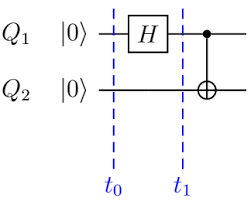
Quantum computing might sound intimidating, but building your first quantum circuit is surprisingly accessible. In this tutorial, we'll use Qiskit (IBM's quantum computing framework) to create a simple single-qubit circuit and understand what's happening at each step.
Prerequisites
You'll need Python 3.7+ and Qiskit installed. Install it with:
pip install qiskit qiskit-aerUnderstanding Qubits
Unlike classical bits (0 or 1), qubits can exist in superposition—simultaneously in both states until measured. This is the fundamental property that gives quantum computers their power.
Creating Your First Circuit
Let's create a simple circuit with one qubit:
from qiskit import QuantumCircuit

# Create a quantum circuit with 1 qubit and 1 classical bit
qc = QuantumCircuit(1, 1)

# Apply a Hadamard gate to create superposition
qc.h(0)

# Measure the qubit
qc.measure(0, 0)

# Draw the circuit
print(qc.draw())
Quantum Gates
Quantum gates manipulate qubits. The most common gates are:
- X gate: Flips the qubit (like a NOT gate)
- Hadamard (H) gate: Creates superposition
- CNOT gate: Entangles two qubits
- Z gate: Applies a phase flip
Running the Circuit
Let's run our circuit on a simulator:
from qiskit_aer import Aer
from qiskit import execute

# Use the QASM simulator
simulator = Aer.get_backend('qasm_simulator')

# Execute the circuit
job = execute(qc, simulator, shots=1000)
result = job.result()
counts = result.get_counts()

print(counts)  # Should show roughly 50/50 split between 0 and 1
Understanding the Results
Because we put the qubit in superposition with the Hadamard gate, measuring it gives us 0 or 1 with equal probability. Running 1000 shots shows this distribution.
What's Next?
This is just the beginning. Next steps include learning about multi-qubit circuits, entanglement, and quantum algorithms like Grover's search and Shor's factoring algorithm.